
Localization
8th Year Chinese I Overseas vs Domestic
This post was written under LETR WORKS, the former name of LETR AI.
What is more important than kanji in Chinese
This post will definitely help anyone interested in the Chinese language. Through ups and downs in Norbase Chinese, I met two people who have reached the 8th year of their relationship with the Chinese language.
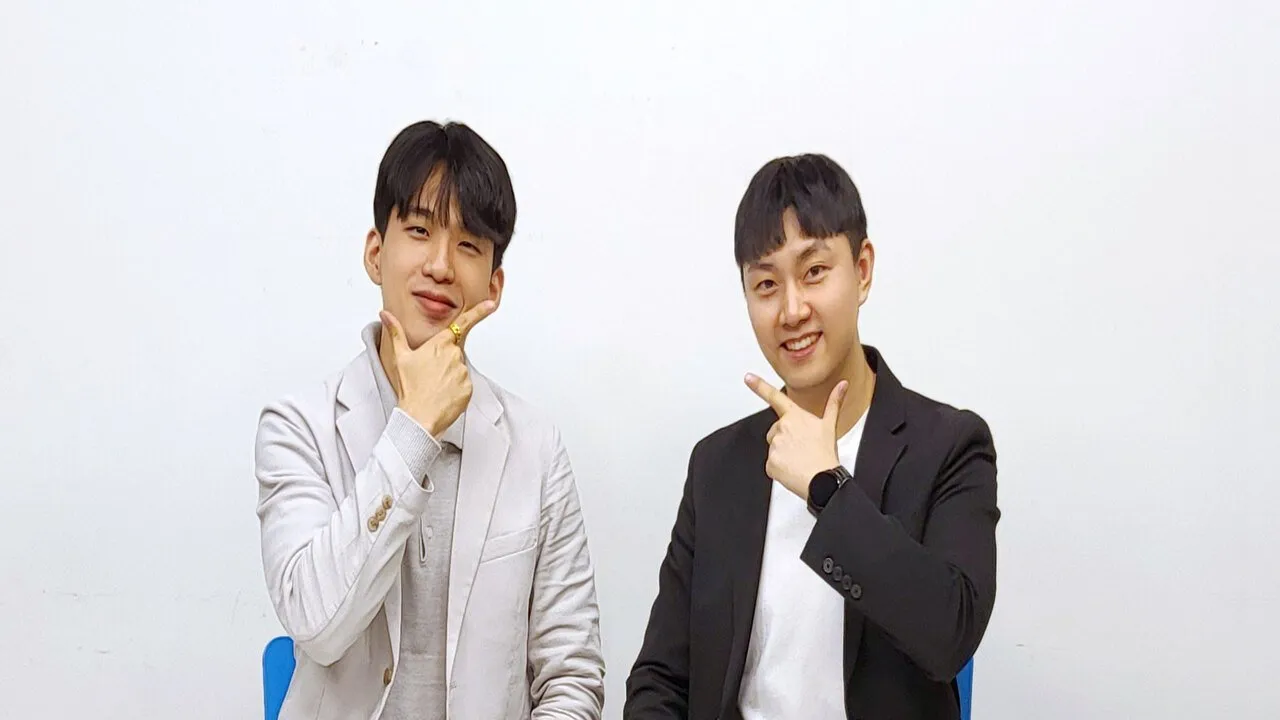
From private lessons to lectures at large language schools, I had a conversation with Shin Kyung Ji Sam, who has 8 years of experience teaching Chinese, and Siho, who is now in her 8th year of studying Chinese as if she were on the ground.

Q. Please introduce yourself
Shiho: Hello. I’m Park Si-ho, an 8th year pure Korean Chinese language learner, majoring in Chinese language and international business administration at Busan University of Foreign Studies!
Kyung Ji Tutor: Hello. My name is Kyung Ji Sam, who is now in her 8th year of teaching Chinese while heading to the ground in China.
Q. Where have you been in China
Teacher Jing Ji: After I first fell in love with China in Harbin and started a relationship with the Chinese language, I stayed in Beijing for 1 year and Shanghai for about 6 years. During that time, I traveled to various places in China on backpacking trips, including Changchun, Shenyang, Jilin, Dalian, Inner Mongolia, Tianjin, Qingdao, Taizhou, Wenzhou, Luoyang, Xi’an, Hangzhou, Suzhou, Changzhou, Ningbo, Xiamen, Lushan, Chengde, Nanjing, Oak, Huangshan, Guangzhou, Lijiang, Wuzhan, and Taiwan. As it turns out, it’s been 8 years that Chinese people love it.
Q. How have you been studying in Korea for 8 years?
Shiho: I first came across Chinese when I was in my first year of high school on the recommendation of a friend. After studying alone for 1 year, I started studying in earnest at Paxda Language School the following year, and for more in-depth study, I entered a university majoring in Chinese, and have been studying Chinese until now. I also participated in a Chinese poetry recitation contest and won an award, and I have also obtained a new HSK level 6.
Q. When studying Chinese, it is said that if you know Korean kanji, you can speak Chinese better. What do you think from the perspective of a Korean who has lived in China for 8 years?
Kyung Ji Tutor: That’s true, but at the same time, it’s dangerous. Definitely the same It’s an advantage for learning Chinese because it’s a Chinese character cultureI have silver. However, because of this part I can’t speak Chinese properly because I can’t speak Chinese properly because I rely on Korean.. Think Chinese in ChineseIt’s best to do it, Korean, the native language, is legal (?) Because they might get involved and speak the wrong Chinese.. exemplifies The baseThere is a saying. In Korean, the kanji is”FundamentalsIt reads “. However, it’s different from the usual usage in Korean. The Korean language is “fundamental.” “The root of speech” is used in this form, but usually the root of Chinese means “at all,” and it tends to be used more frequently along with negative sentences. When I say “I have no idea what happened,” I don’t even know what happened, and I’m not looking for an expression corresponding to “at all” in Chinese and Korean on a 1:1 basis. You can check out any number of similar use cases even if you take a quick look. 文章 The Korean kanji pronunciation “sentence” means “text” rather than a sentence in Chinese.
Q. What part of living in China has helped you most in learning Chinese?
Kyung Ji Tutor: There may be many parts, but among them, mine The biggest change in Chinese life is a change in linguistic thinkingThat was it. So I started thinking about the expression I wanted to say by switching from Korean thinking to Chinese thinking. Did you know that the flow of thought is different when speaking Korean and Chinese? When I was really immersed in Chinese, I dreamed about Chinese, and when I saw that, I think that trend was evident naturally. I’ll take an example.
“Creating habits. “, “Be number one.”
How do you express these expressions in Chinese? As soon as I asked the question, the decision was made within 1 second.
By focusing on the Korean language, habits are habits, making… actions? Those who think so! The first place corresponds to the first place, and… do it? Those who thought so! I’m sure they’ll be there. It’s not a 1:1 correspondence between Korean and Chinese, but of the corresponding expression verbsIt’s important to think about how to say it in Chinese. It means nurturing in Korean, but the most appropriate expression for the phrase “to create a habit” is to develop a habit — it won first place and won a title. It becomes these expressions. Shall I ask you one more question? “It rained a lot yesterday.” How do you say in Chinese?
Instinctively, it fell quite a while agolargeIf you said it’s rain, you’re doing a good job studying Chinese right now. I’m interested in “many/less” in Korean (?) If this is the case, I think Chinese is more interested in “big/small.” At any rate, I think the first thing to do is get rid of the obsessive idea that Korean and Chinese should be matched on a 1:1 basis.
Also, while living in the local area, I was stressed about pronunciation, word wigwright I think it was complemented and refined by a game called Zanmaru.
4 is 40 is 10, 40 is 40, 14 is 14, 4 is not 14, 14 is not 40 (4 is 4, 10 is 10, 14 is 14, 40 is 40, 40 is not 14, 14 is not 40) Something like this. The beginning is difficult, and if you try it a few times, your pronunciation will be corrected, and you can learn to read Chinese quite well. ^^
Q. How did Shiho study Chinese in Korea?
Shiho: At first, I worked hard to get an HSK certification. Then I got Level 6, and crucially, I think it was very helpful to build up my Chinese language skills by attending the Chinese Poetry Recitation Contest and the Chinese National PPT Contest when I was in college.
Q. Are there any tips for using a Chinese translator like PAOO or Gu O?
Kyung Ji Tutor: When do you usually use a translator? usually We use translators to interpret wordsBut at that time it was better than a translator Looking for dictionaries is more effectiveI work a lot.
A translator is better than knowing the meaning of words Effective when you want to understand the contextI think so.
For example,”everythingIf you ask the translator what” means, you may not be able to get the desired results. This is because the word “all” can be applied differently in different situations.
This is because there is also the word capital, and all expressions such as all of them mean “all” in Korean.
So rather than focusing on Korean vocables/expressions, my Korean Whether it is specific and appropriate for the situation where you want to speak ChineseI think it’s important to think about it.
When checking out after eating at a restaurant, “How much is it here (how much is it here?)” The expression is good, but if you express it with the expression “I’ll do the math (payment/checkout),” I think it’s a bit more reflective of Chinese thinking.
By doing this, you’ll be able to get a little more insight even when using a translator.
But suddenly I’m curious, how does the translator say this sentence?
**
Are you enjoying Chinese tips to help you learn how to read it?
I checked the following information with the Gicon Studio comparison translator, which can compare the translation results of Google, Papago, and Kakao.
Check out the video below for more information about the vivid atmosphere of the scene.
👉One thing you must know if you speak Chinese I Nice?!
See you in the next post
*This content has been transferred from Gicon Studio to Letterworks.
🚀Experience the Data Intelligence Platform ‘LETR WORKS’ NOW!
• Try out the content of Notes firsthand! (One-month free trial available 🎉)
• Curious about how AI technology is applied? (Request a POC sample 💌)